Subatomic Particles & Atomic Calculations
The Three Subatomic Particles
| Particle | Symbol | Charge | Mass (u) | Mass (kg) | Location |
|---|
| Proton | p | +1 | 1 | 1.673 × 10⁻²⁷ | Nucleus |
| Neutron | n | 0 | 1 | 1.675 × 10⁻²⁷ | Nucleus |
| Electron | e | -1 | ≈ 0 | 9.109 × 10⁻³¹ | Electron cloud |
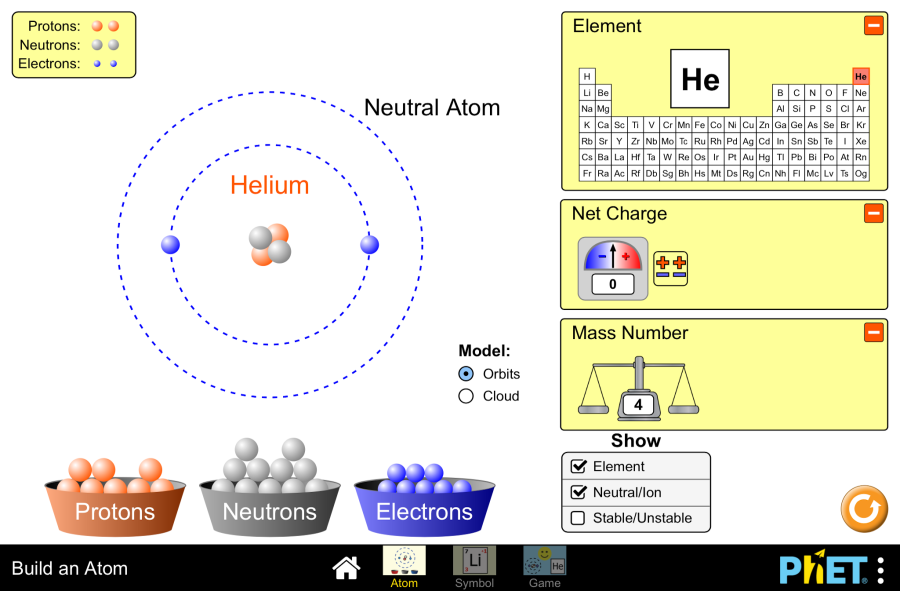
Key Formulas

| Symbol | Name | Formula |
|---|
| Z | Atomic number | = number of protons |
| A | Mass number | = protons + neutrons |
| n | Neutrons | = A - Z |
| e | Electrons (neutral) | = protons |
| Charge | Ion charge | = protons - electrons |
Worked Examples
Example 1: Neutral Atom — ¹⁶₈O (Oxygen-16)
| Symbol | Value | How? |
|---|
| Z | 8 | Given (bottom number) |
| A | 16 | Given (top number) |
| p | 8 | p = Z |
| n | 8 | n = A - Z = 16 - 8 |
| e | 8 | e = p (neutral) |
| Charge | 0 | Neutral atom |
Example 2: Cation (+) — ²³₁₁Na⁺ (Sodium ion)
| Symbol | Value | How? |
|---|
| Z | 11 | Given |
| A | 23 | Given |
| p | 11 | p = Z |
| n | 12 | n = A - Z = 23 - 11 |
| e | 10 | Lost 1 electron |
| Charge | +1 | p - e = 11 - 10 |
Example 3: Anion (-) — ³²₁₆S²⁻ (Sulfide ion)
| Symbol | Value | How? |
|---|
| Z | 16 | Given |
| A | 32 | Given |
| p | 16 | p = Z |
| n | 16 | n = A - Z = 32 - 16 |
| e | 18 | Gained 2 electrons |
| Charge | -2 | p - e = 16 - 18 |
Example 4: Identify from particles — p = 26, n = 30, e = 24
| Symbol | Value | How? |
|---|
| p | 26 | Given |
| Z | 26 | Z = p |
| Element | Iron (Fe) | Look up Z = 26 |
| n | 30 | Given |
| A | 56 | A = p + n = 26 + 30 |
| e | 24 | Given |
| Charge | +2 | p - e = 26 - 24 |
| Ion | Fe²⁺ | Cation (lost 2 e) |
Practice Tables
Table 1: Neutral Atoms
Complete the missing values:
| Element | Symbol | Z | A | p | n | e | Charge |
|---|
| Hydrogen | ¹₁H | 1 | 1 | 1 | 0 | 1 | 0 |
| Carbon | ¹²₆C | 6 | 12 | 6 | 6 | 6 | 0 |
| Nitrogen | ¹⁴₇N | 7 | 14 | 7 | 7 | 7 | 0 |
| Oxygen | ¹⁶₈O | 8 | 16 | 8 | 8 | 8 | 0 |
| Sodium | ²³₁₁Na | 11 | 23 | 11 | 12 | 11 | 0 |
| Chlorine | ³⁵₁₇Cl | 17 | 35 | 17 | 18 | 17 | 0 |
| Iron | ⁵⁶₂₆Fe | 26 | 56 | 26 | 30 | 26 | 0 |
Table 2: Cations (Positive Ions)
| Ion | Z | A | p | n | e | Charge |
|---|
| Na⁺ | 11 | 23 | 11 | 12 | 10 | +1 |
| K⁺ | 19 | 39 | 19 | 20 | 18 | +1 |
| Mg²⁺ | 12 | 24 | 12 | 12 | 10 | +2 |
| Ca²⁺ | 20 | 40 | 20 | 20 | 18 | +2 |
| Al³⁺ | 13 | 27 | 13 | 14 | 10 | +3 |
| Fe²⁺ | 26 | 56 | 26 | 30 | 24 | +2 |
| Fe³⁺ | 26 | 56 | 26 | 30 | 23 | +3 |
| Cu²⁺ | 29 | 64 | 29 | 35 | 27 | +2 |
Table 3: Anions (Negative Ions)
| Ion | Z | A | p | n | e | Charge |
|---|
| F⁻ | 9 | 19 | 9 | 10 | 10 | -1 |
| Cl⁻ | 17 | 35 | 17 | 18 | 18 | -1 |
| Br⁻ | 35 | 80 | 35 | 45 | 36 | -1 |
| O²⁻ | 8 | 16 | 8 | 8 | 10 | -2 |
| S²⁻ | 16 | 32 | 16 | 16 | 18 | -2 |
| N³⁻ | 7 | 14 | 7 | 7 | 10 | -3 |
| P³⁻ | 15 | 31 | 15 | 16 | 18 | -3 |
Isotopes
Isotopes = Same Z (protons), different n (neutrons)
Hydrogen Isotopes
| Name | Symbol | Z | A | p | n | e | Abundance | Stability | Use / Occurrence |
|---|
| Protium | ¹₁H | 1 | 1 | 1 | 0 | 1 | 99.98% | Stable | Most common; found in water (H₂O) and organic compounds |
| Deuterium | ²₁H (D) | 1 | 2 | 1 | 1 | 1 | 0.02% | Stable | Heavy water (D₂O) in nuclear reactors; NMR spectroscopy |
| Tritium | ³₁H (T) | 1 | 3 | 1 | 2 | 1 | Trace | ☢️ Radioactive (t½ = 12.3 y) | Nuclear fusion fuel; glow-in-the-dark watches; produced in nuclear reactors |
Carbon Isotopes
| Name | Symbol | Z | A | p | n | e | Abundance | Stability | Use / Occurrence |
|---|
| Carbon-12 | ¹²₆C | 6 | 12 | 6 | 6 | 6 | 98.9% | Stable | Standard for atomic mass unit (1 u = 1/12 of ¹²C); all organic matter |
| Carbon-13 | ¹³₆C | 6 | 13 | 6 | 7 | 6 | 1.1% | Stable | NMR spectroscopy; metabolic studies; climate research |
| Carbon-14 | ¹⁴₆C | 6 | 14 | 6 | 8 | 6 | Trace | ☢️ Radioactive (t½ = 5,730 y) | Radiocarbon dating of fossils and archaeological artifacts; formed in atmosphere by cosmic rays |
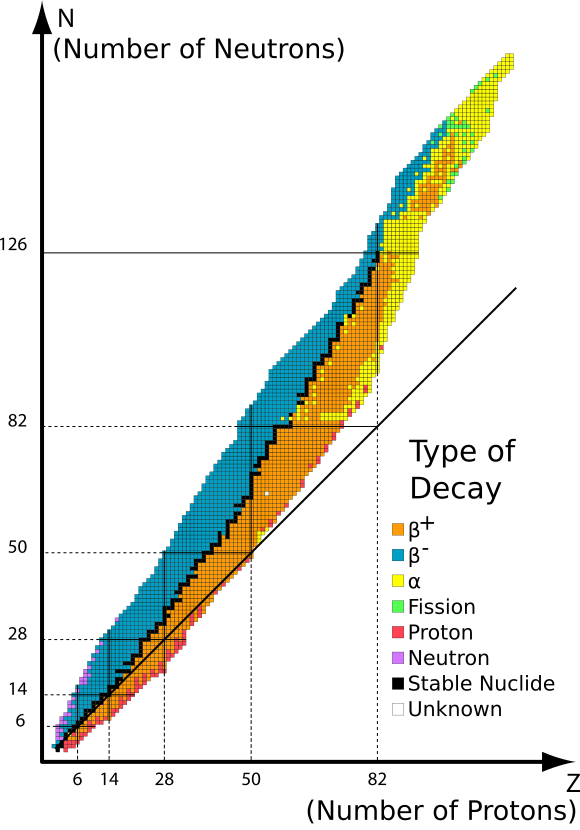
Nuclear Stability Chart
Identify the Element
Use the periodic table to identify elements from their data:
Table 4: Find the Element
| Z | A | p | n | e | Charge | Element | Isotope | Symbol |
|---|
| 1 | 1 | 1 | 0 | 1 | 0 | Hydrogen | Protium | 1H |
| 6 | 12 | 6 | 6 | 6 | 0 | Carbon | Carbon-12 | 12C |
| 8 | 16 | 8 | 8 | 10 | -2 | Oxygen | Oxygen-16 | 16O2- |
| 11 | 23 | 11 | 12 | 10 | +1 | Sodium | Sodium-23 | 23Na+ |
| 17 | 35 | 17 | 18 | 18 | -1 | Chlorine | Chlorine-35 | 35Cl- |
| 26 | 56 | 26 | 30 | 24 | +2 | Iron | Iron-56 | 56Fe2+ |
| 20 | 40 | 20 | 20 | 18 | +2 | Calcium | Calcium-40 | 40Ca2+ |
1. Complete the table for ¹⁶₈O (Oxygen-16):
(6 points)
Feedback: Z = 8, A = 16, p = 8, n = 16-8 = 8, e = 8 (neutral), charge = 0
2. Complete the table for ⁵⁶₂₆Fe (Iron-56):
(6 points)
Feedback: Z = 26, A = 56, p = 26, n = 56-26 = 30, e = 26 (neutral), charge = 0
3. Complete the table for ²³₁₁Na⁺ (Sodium ion):
(6 points)
Feedback: Z = 11, A = 23, p = 11, n = 12, e = 10 (lost 1), charge = +1
4. Complete the table for ³⁵₁₇Cl⁻ (Chloride ion):
(6 points)
Feedback: Z = 17, A = 35, p = 17, n = 18, e = 18 (gained 1), charge = -1
5. Complete the table for ⁴⁰₂₀Ca²⁺ (Calcium ion):
(6 points)
Feedback: Z = 20, A = 40, p = 20, n = 20, e = 18 (lost 2), charge = +2
6. Complete the table for ³²₁₆S²⁻ (Sulfide ion):
(6 points)
Feedback: Z = 16, A = 32, p = 16, n = 16, e = 18 (gained 2), charge = -2
7. Complete the table for ²⁷₁₃Al³⁺ (Aluminum ion):
(6 points)
Feedback: Z = 13, A = 27, p = 13, n = 14, e = 10 (lost 3), charge = +3
8. Complete the table for ¹⁹₉F⁻ (Fluoride ion):
(6 points)
Feedback: Z = 9, A = 19, p = 9, n = 10, e = 10 (gained 1), charge = -1
9. Identify the element: Z = 6, A = 12
(6 points)
Feedback: Z = 6 → Carbon (C), p = 6, n = 12-6 = 6, e = 6, charge = 0
10. Identify the element: Z = 7, A = 14
(6 points)
Feedback: Z = 7 → Nitrogen (N), p = 7, n = 14-7 = 7, e = 7, charge = 0
11. Identify the element: Z = 19, A = 39, charge = +1
(6 points)
Feedback: Z = 19 → Potassium (K), p = 19, n = 20, e = 18, K⁺
12. Identify the element: Z = 12, A = 24, charge = +2
(6 points)
Feedback: Z = 12 → Magnesium (Mg), p = 12, n = 12, e = 10, Mg²⁺
13. Given: p = 26, n = 30, e = 23. Find all values:
(6 points)
Feedback: p = 26 → Iron (Fe), Z = 26, A = 26+30 = 56, charge = 26-23 = +3, Fe³⁺
14. Given: p = 8, n = 8, e = 10. Find all values:
(6 points)
Feedback: p = 8 → Oxygen (O), Z = 8, A = 8+8 = 16, charge = 8-10 = -2, O²⁻
15. Given: p = 1, n = 0, e = 1. Find all values:
(6 points)
Feedback: p = 1 → Hydrogen (H), Z = 1, A = 1+0 = 1, charge = 0, Protium
16. Given: p = 1, n = 1, e = 1. Find all values:
(6 points)
Feedback: p = 1 → Hydrogen, Z = 1, A = 1+1 = 2, charge = 0, Deuterium
17. Complete the table for ⁶⁴₂₉Cu²⁺ (Copper(II) ion):
(6 points)
Feedback: Z = 29, A = 64, p = 29, n = 35, e = 27 (lost 2), charge = +2
18. Complete the table for ³¹₁₅P³⁻ (Phosphide ion):
(6 points)
Feedback: Z = 15, A = 31, p = 15, n = 16, e = 18 (gained 3), charge = -3
19. Identify: A species has 10 electrons, 10 protons, 10 neutrons:
(6 points)
Feedback: p = 10 → Neon (Ne), Z = 10, A = 20, charge = 0, neutral atom
20. Identify: A species has 18 electrons, 17 protons, 18 neutrons:
(6 points)
Feedback: p = 17 → Chlorine (Cl), Z = 17, A = 35, charge = -1, ion (anion)